Web Design
Design Labs Web Design
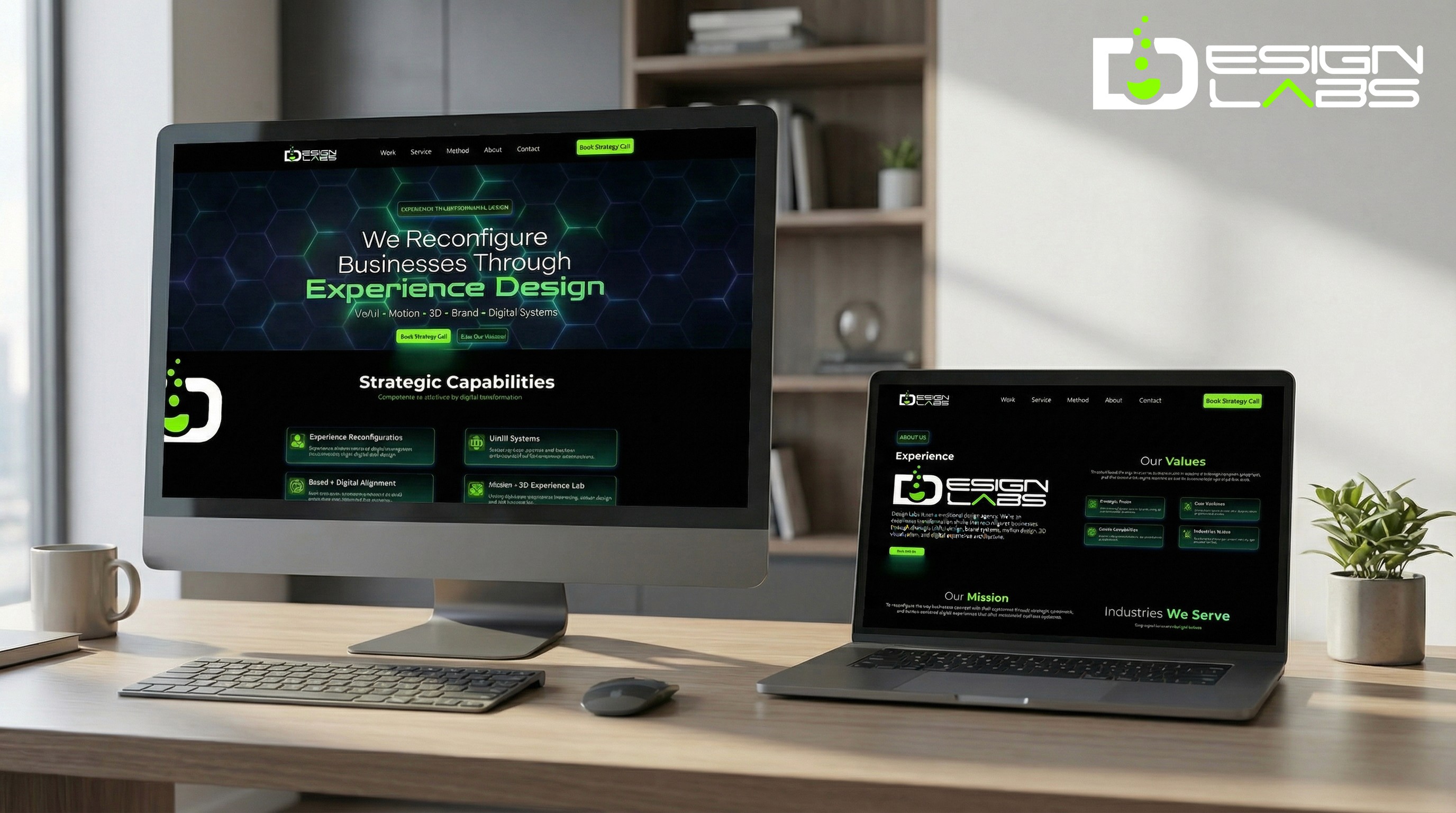
Design Labs is a concept-driven platform and consultancy that transforms complex AI and SaaS products into clear, scalable, and intelligent user experiences through systems-based design.
Year :
2025
Industry :
Tech
Client :
Design Labs
Project Duration :
6 weeks
Problem : Complexity without clarity is just noise.
01 — THE PROBLEM
Complexity without clarity is just noise.
“Most products today are built around dashboards and tools, not around the decisions people actually need to make.”
Enterprise products, AI platforms, and SaaS tools have all become more powerful and, paradoxically, less usable. Teams are drowning in data, switching between disconnected systems, and building features nobody asked for. The result is complexity without direction, products that do more but mean less.
Design Labs was created to explore a different model, one where design isn’t a finishing layer applied at the end, but the organizing intelligence that shapes how complex systems become clear, usable, and scalable from the very beginning.
Core Problems
Complexity Without Direction
Enterprise and AI products accumulate features, dashboards, and integrations but rarely have a design system coherent enough to make those capabilities feel intentional or navigable.
Fragmented Systems
Product teams operate across disconnected tools with no unified design language, creating inconsistent experiences that erode user trust and slow down shipping velocity.
AI as an Add-On
Most products bolt AI onto existing interfaces, a chatbot here and a suggestion there, rather than rethinking the product experience around what AI actually changes about how decisions get made.
Design Without Strategy
Design is treated as execution, screens, and components, rather than strategy. The result is beautiful products that don’t move business metrics and complex platforms that users abandon.
“Design Labs exists to prove one thing: when design leads with system thinking, complexity becomes a competitive advantage, not a liability.”
CORE PRINCIPLE
Signal → Pattern → Direction
Every Design Labs engagement, product, and decision is anchored in a single operating principle, the belief that the designer’s job is to find the signal in the noise, recognize the patterns that matter, and shape them into clear direction.
Signal
Identify what actually matters, the real user need, the business lever, and the moment that changes behavior from all the noise around it.
Pattern
Recognize the systems and structures underneath, the repeating decisions, the design tokens, the interaction models that scale without breaking.
Direction
Transform insight and patterns into clear, actionable product direction, a vision teams can build toward, not a document that sits in Notion.
My Role : Strategy, design, and systems, one unified vision.
02 — MY ROLE
Strategy, design, and systems, one unified vision.
“Solo-led from concept to execution, every layer shaped by the same hand and the same principle.”
Design Labs was built as a solo initiative, giving me complete ownership over every layer of the platform, from the strategic positioning to the interaction details. That coherence was intentional. Design Labs is itself a demonstration of what it sells. A consultancy model built around system thinking had to be a system, end to end.
Led project from concept to execution end-to-end, defining the platform vision, strategic positioning, and design principles from a blank page
Defined product vision, strategy, and design principles, establishing Design Labs as a next-generation product design model for AI and SaaS environments
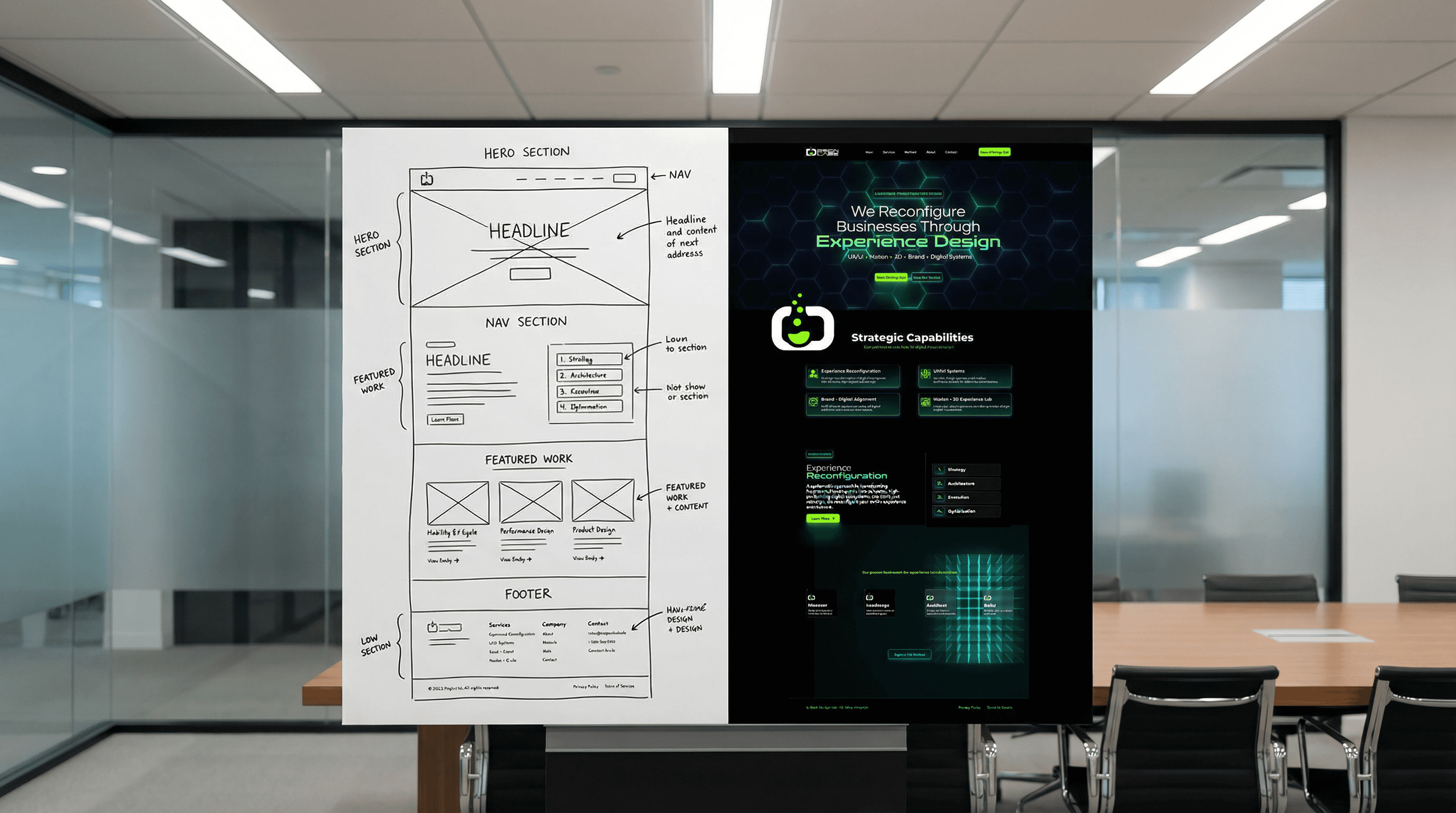
Designed the full platform UI and product experience, creating interface patterns and interaction models built for enterprise clarity, not enterprise complexity
Built the design system and component architecture, a scalable, token-based system that could serve as the foundation for any AI or SaaS product built within the Design Labs model
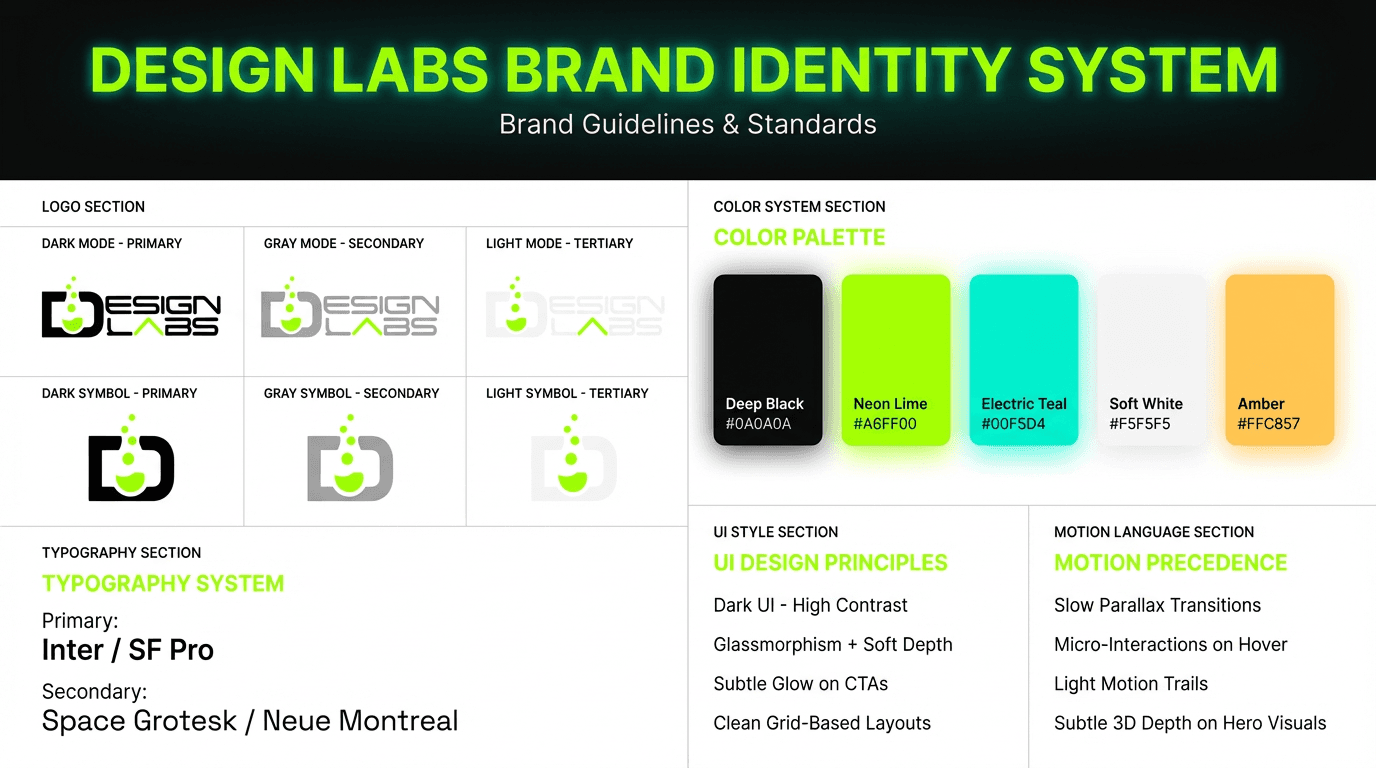
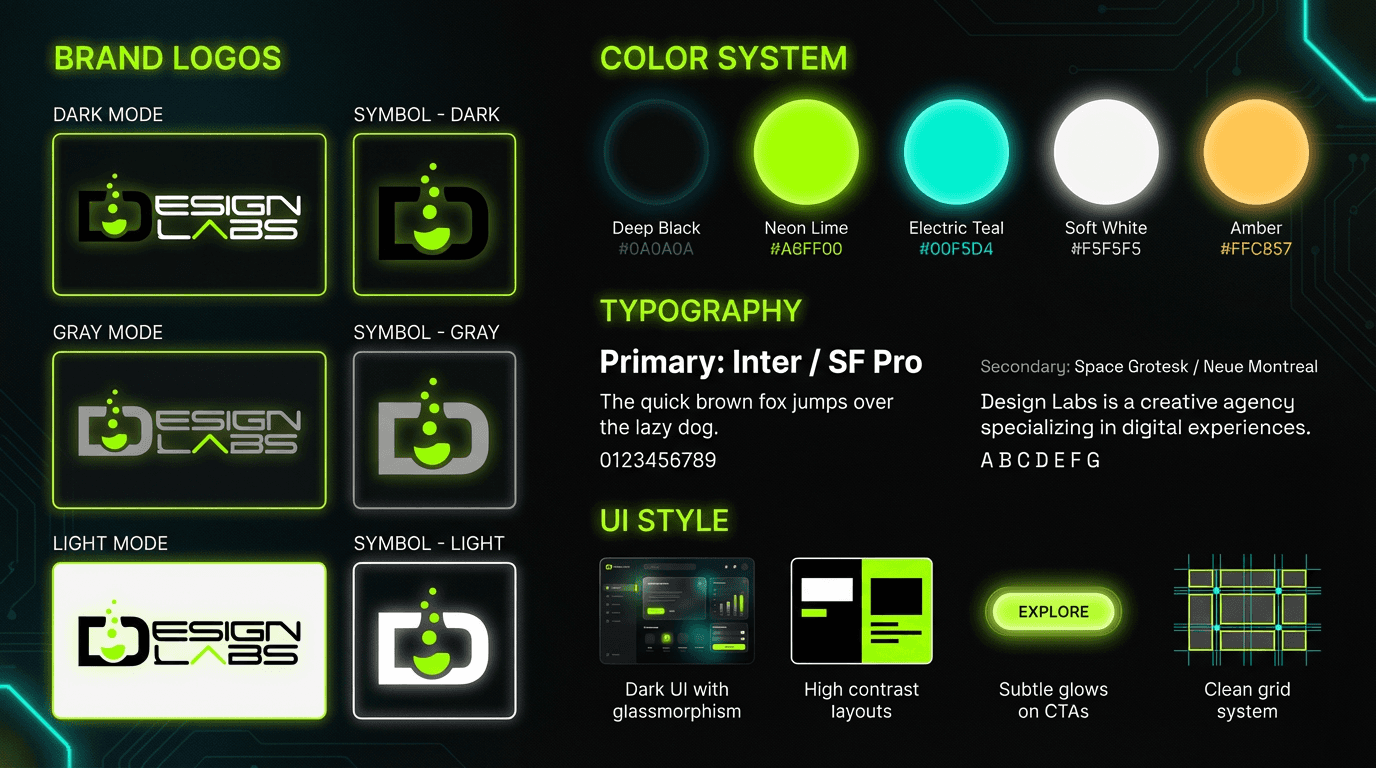
Created the brand identity and positioning, visual language, typography, color, and tone of voice that positioned Design Labs as credible, authoritative, and distinctly modern
Developed the narrative and storytelling framework, case study structure, presentation architecture, and the language that translates complex design systems into clear business value.

Key Decisions : The principles that shaped the platform.
03 — KEY DECISIONS
The principles that shaped the platform.
“Every design decision was a proof of the model; Design Labs had to be what it was selling.”
Design as Surface vs. Design as System
Rejected
Treating design as a visual execution layer, screens, components, and brand assets are delivered at the end of a process someone else controlled.
Chosen
Treating design as the organizing intelligence, a system that shapes product strategy, information architecture, and interaction models from the first day.
Why:
The most expensive design problems are the ones caught at the end. Design as system thinking moves the leverage point to where it actually matters, the beginning.
AI as Feature vs. AI as Product Layer
Rejected
Adding AI capabilities as isolated features, a chat interface bolted onto an existing product, or a suggestion engine overlaid on a dashboard.
Chosen
Integrating AI thinking into the product layer itself, rethinking information architecture, decision flows, and interaction models around what AI fundamentally changes.
Why:
AI doesn’t make existing product patterns better; it makes them obsolete. The products that win will be the ones redesigned around what AI enables, not patched to include it.
Feature Richness vs. Clarity at Scale
Rejected
Demonstrating Design Labs’ capability through feature density, complex dashboards, deep configuration, and elaborate interaction patterns.
Chosen
Demonstrating capability through clarity, every screen, component, and system is designed to communicate one thing at a time, without sacrificing depth.
Why:
The hardest design problem isn’t adding, it’s removing. A platform that shows restraint proves more design maturity than one that shows everything it can do.
Consultancy vs. Platform
Rejected
Positioning Design Labs purely as a services model, a consultancy that delivers design work project by project without a scalable product foundation.
Chosen
A hybrid model, consultancy thinking embedded in a platform, where every engagement builds toward a reusable, scalable system rather than a one-time deliverable.
Why:
Services don’t scale. Systems do. Design Labs had to be both smart enough to solve unique problems and systematic enough to build on every answer.

The Solution : A platform that turns complexity into clarity.
04 — THE SOLUTION
A platform that turns complexity into clarity.
“Design Labs is the proof of concept for its own model, every layer designed to demonstrate what it teaches.”
The Design Labs platform was built as a complete, functioning demonstration of the signal, pattern, and direction model. Not a pitch deck. Not a mockup. A fully realized system, brand, UI, design system, and narrative that any enterprise SaaS or AI product team could see themselves inside.
Brand Identity and Positioning
A visual language and brand position that communicated authority, clarity, and forward-thinking, without the sterile sameness of most enterprise design brands.
Distinct visual identity built for credibility at scale
Positioning language that reframes design as strategy
Tone of voice consistent from brand mark to case study copy
Platform UI and Product Concepts
Interface designs for the core Design Labs platform, dashboards, engagement views, and product concepts built around how design decisions actually get made in complex organizations.
Enterprise-grade clarity without enterprise visual debt
AI-native interaction patterns embedded throughout
Information hierarchy that surfaces signal, not noise
Design System and Component Architecture
A token-based, scalable design system, the same infrastructure Design Labs would bring to client engagements, built and documented to production standards.
Design tokens for consistent cross-platform application
Component library built for AI and SaaS environments
Architecture designed to scale without fragmentation
Website and Digital Experience
A website and digital presence that functioned as a product in itself, not a marketing page, but an experience that demonstrated the Design Labs model in real time.
Designed to convert complex capability into clear value
Case study storytelling framework embedded throughout
Motion and interaction language that reflected the brand’s intelligence
Narrative and Storytelling Framework
A structured approach to translating complex design work into business-legible stories, the language framework that makes Design Labs compelling to enterprise buyers, not just designers.
Case study architecture that connects design to outcomes
Presentation framework built for stakeholder alignment
Narrative language that positions design as ROI, not cost
Unified Ecosystem
Brand, product, system, and story, unified under a single, coherent vision. No disconnected assets, no inconsistent language, no version drift across touchpoints.
One design language across every artifact
Platform and consultancy model working as one system
Scalable foundation for future product and engagement expansion
Core Statement
Design Labs is simultaneously the product and the proof, a platform built by applying the same system thinking it teaches. Every design decision was made to demonstrate, not just describe, what next-generation product design looks like in AI and enterprise environments.

05 — OUTCOMES
A new standard for design-led product thinking.
“Every deliverable was built to demonstrate one thing: what product design looks like when it leads.”
Design Labs was measured against a single standard: Does it feel like a next-generation product design practice, not a portfolio project? Every outcome was built to answer yes and to give enterprise SaaS teams, AI product builders, and design leaders something they could see themselves working with.
Platform and System
Realized
Platform Vision
A fully realized platform concept that demonstrates how complex systems become intuitive, not a wireframe but a complete, credible product experience.
Scalable
Design Language and Framework
A design system and component architecture are ready to serve as the foundation for future AI and SaaS product builds, tokens, patterns, and interaction models, all documented.
Native
AI Integration Model
AI thinking is embedded into the product layer, not as a feature, but as a fundamental rethinking of how enterprise interfaces surface signals and enable decision-making.
Unified
Ecosystem Coherence
The brand, product UI, design system, website, and narrative are all designed under the same principles, by the same hand, producing a rare level of cross-touchpoint consistency.
Positioning and Impact
Flagship
Case Study and Positioning
Design Labs is a flagship portfolio piece that positions Sam Lombardo as a next-generation product design leader at the intersection of AI, systems thinking, and enterprise UX.
Clear
Narrative Framework
A storytelling system that translates complex design decisions into business-legible value, giving any design leader a repeatable framework for communicating design’s strategic impact.
Sharp
Enterprise Relevance
Directly addresses the pain points of enterprise SaaS companies, AI-driven product teams, and founders scaling complex platforms, making it immediately legible to the right buyers.
Proven
Model Validation
The Signal, Pattern, Direction model wasn’t just written; it was applied. Design Labs is the proof that the model works, built by following its own principles from day one.
More Projects
Web Design
Design Labs Web Design
Design Labs is a concept-driven platform and consultancy that transforms complex AI and SaaS products into clear, scalable, and intelligent user experiences through systems-based design.
Year :
2025
Industry :
Tech
Client :
Design Labs
Project Duration :
6 weeks
Problem : Complexity without clarity is just noise.
01 — THE PROBLEM
Complexity without clarity is just noise.
“Most products today are built around dashboards and tools, not around the decisions people actually need to make.”
Enterprise products, AI platforms, and SaaS tools have all become more powerful and, paradoxically, less usable. Teams are drowning in data, switching between disconnected systems, and building features nobody asked for. The result is complexity without direction, products that do more but mean less.
Design Labs was created to explore a different model, one where design isn’t a finishing layer applied at the end, but the organizing intelligence that shapes how complex systems become clear, usable, and scalable from the very beginning.
Core Problems
Complexity Without Direction
Enterprise and AI products accumulate features, dashboards, and integrations but rarely have a design system coherent enough to make those capabilities feel intentional or navigable.
Fragmented Systems
Product teams operate across disconnected tools with no unified design language, creating inconsistent experiences that erode user trust and slow down shipping velocity.
AI as an Add-On
Most products bolt AI onto existing interfaces, a chatbot here and a suggestion there, rather than rethinking the product experience around what AI actually changes about how decisions get made.
Design Without Strategy
Design is treated as execution, screens, and components, rather than strategy. The result is beautiful products that don’t move business metrics and complex platforms that users abandon.
“Design Labs exists to prove one thing: when design leads with system thinking, complexity becomes a competitive advantage, not a liability.”
CORE PRINCIPLE
Signal → Pattern → Direction
Every Design Labs engagement, product, and decision is anchored in a single operating principle, the belief that the designer’s job is to find the signal in the noise, recognize the patterns that matter, and shape them into clear direction.
Signal
Identify what actually matters, the real user need, the business lever, and the moment that changes behavior from all the noise around it.
Pattern
Recognize the systems and structures underneath, the repeating decisions, the design tokens, the interaction models that scale without breaking.
Direction
Transform insight and patterns into clear, actionable product direction, a vision teams can build toward, not a document that sits in Notion.
My Role : Strategy, design, and systems, one unified vision.
02 — MY ROLE
Strategy, design, and systems, one unified vision.
“Solo-led from concept to execution, every layer shaped by the same hand and the same principle.”
Design Labs was built as a solo initiative, giving me complete ownership over every layer of the platform, from the strategic positioning to the interaction details. That coherence was intentional. Design Labs is itself a demonstration of what it sells. A consultancy model built around system thinking had to be a system, end to end.
Led project from concept to execution end-to-end, defining the platform vision, strategic positioning, and design principles from a blank page
Defined product vision, strategy, and design principles, establishing Design Labs as a next-generation product design model for AI and SaaS environments
Designed the full platform UI and product experience, creating interface patterns and interaction models built for enterprise clarity, not enterprise complexity
Built the design system and component architecture, a scalable, token-based system that could serve as the foundation for any AI or SaaS product built within the Design Labs model
Created the brand identity and positioning, visual language, typography, color, and tone of voice that positioned Design Labs as credible, authoritative, and distinctly modern
Developed the narrative and storytelling framework, case study structure, presentation architecture, and the language that translates complex design systems into clear business value.
Key Decisions : The principles that shaped the platform.
03 — KEY DECISIONS
The principles that shaped the platform.
“Every design decision was a proof of the model; Design Labs had to be what it was selling.”
Design as Surface vs. Design as System
Rejected
Treating design as a visual execution layer, screens, components, and brand assets are delivered at the end of a process someone else controlled.
Chosen
Treating design as the organizing intelligence, a system that shapes product strategy, information architecture, and interaction models from the first day.
Why:
The most expensive design problems are the ones caught at the end. Design as system thinking moves the leverage point to where it actually matters, the beginning.
AI as Feature vs. AI as Product Layer
Rejected
Adding AI capabilities as isolated features, a chat interface bolted onto an existing product, or a suggestion engine overlaid on a dashboard.
Chosen
Integrating AI thinking into the product layer itself, rethinking information architecture, decision flows, and interaction models around what AI fundamentally changes.
Why:
AI doesn’t make existing product patterns better; it makes them obsolete. The products that win will be the ones redesigned around what AI enables, not patched to include it.
Feature Richness vs. Clarity at Scale
Rejected
Demonstrating Design Labs’ capability through feature density, complex dashboards, deep configuration, and elaborate interaction patterns.
Chosen
Demonstrating capability through clarity, every screen, component, and system is designed to communicate one thing at a time, without sacrificing depth.
Why:
The hardest design problem isn’t adding, it’s removing. A platform that shows restraint proves more design maturity than one that shows everything it can do.
Consultancy vs. Platform
Rejected
Positioning Design Labs purely as a services model, a consultancy that delivers design work project by project without a scalable product foundation.
Chosen
A hybrid model, consultancy thinking embedded in a platform, where every engagement builds toward a reusable, scalable system rather than a one-time deliverable.
Why:
Services don’t scale. Systems do. Design Labs had to be both smart enough to solve unique problems and systematic enough to build on every answer.
The Solution : A platform that turns complexity into clarity.
04 — THE SOLUTION
A platform that turns complexity into clarity.
“Design Labs is the proof of concept for its own model, every layer designed to demonstrate what it teaches.”
The Design Labs platform was built as a complete, functioning demonstration of the signal, pattern, and direction model. Not a pitch deck. Not a mockup. A fully realized system, brand, UI, design system, and narrative that any enterprise SaaS or AI product team could see themselves inside.
Brand Identity and Positioning
A visual language and brand position that communicated authority, clarity, and forward-thinking, without the sterile sameness of most enterprise design brands.
Distinct visual identity built for credibility at scale
Positioning language that reframes design as strategy
Tone of voice consistent from brand mark to case study copy
Platform UI and Product Concepts
Interface designs for the core Design Labs platform, dashboards, engagement views, and product concepts built around how design decisions actually get made in complex organizations.
Enterprise-grade clarity without enterprise visual debt
AI-native interaction patterns embedded throughout
Information hierarchy that surfaces signal, not noise
Design System and Component Architecture
A token-based, scalable design system, the same infrastructure Design Labs would bring to client engagements, built and documented to production standards.
Design tokens for consistent cross-platform application
Component library built for AI and SaaS environments
Architecture designed to scale without fragmentation
Website and Digital Experience
A website and digital presence that functioned as a product in itself, not a marketing page, but an experience that demonstrated the Design Labs model in real time.
Designed to convert complex capability into clear value
Case study storytelling framework embedded throughout
Motion and interaction language that reflected the brand’s intelligence
Narrative and Storytelling Framework
A structured approach to translating complex design work into business-legible stories, the language framework that makes Design Labs compelling to enterprise buyers, not just designers.
Case study architecture that connects design to outcomes
Presentation framework built for stakeholder alignment
Narrative language that positions design as ROI, not cost
Unified Ecosystem
Brand, product, system, and story, unified under a single, coherent vision. No disconnected assets, no inconsistent language, no version drift across touchpoints.
One design language across every artifact
Platform and consultancy model working as one system
Scalable foundation for future product and engagement expansion
Core Statement
Design Labs is simultaneously the product and the proof, a platform built by applying the same system thinking it teaches. Every design decision was made to demonstrate, not just describe, what next-generation product design looks like in AI and enterprise environments.
05 — OUTCOMES
A new standard for design-led product thinking.
“Every deliverable was built to demonstrate one thing: what product design looks like when it leads.”
Design Labs was measured against a single standard: Does it feel like a next-generation product design practice, not a portfolio project? Every outcome was built to answer yes and to give enterprise SaaS teams, AI product builders, and design leaders something they could see themselves working with.
Platform and System
Realized
Platform Vision
A fully realized platform concept that demonstrates how complex systems become intuitive, not a wireframe but a complete, credible product experience.
Scalable
Design Language and Framework
A design system and component architecture are ready to serve as the foundation for future AI and SaaS product builds, tokens, patterns, and interaction models, all documented.
Native
AI Integration Model
AI thinking is embedded into the product layer, not as a feature, but as a fundamental rethinking of how enterprise interfaces surface signals and enable decision-making.
Unified
Ecosystem Coherence
The brand, product UI, design system, website, and narrative are all designed under the same principles, by the same hand, producing a rare level of cross-touchpoint consistency.
Positioning and Impact
Flagship
Case Study and Positioning
Design Labs is a flagship portfolio piece that positions Sam Lombardo as a next-generation product design leader at the intersection of AI, systems thinking, and enterprise UX.
Clear
Narrative Framework
A storytelling system that translates complex design decisions into business-legible value, giving any design leader a repeatable framework for communicating design’s strategic impact.
Sharp
Enterprise Relevance
Directly addresses the pain points of enterprise SaaS companies, AI-driven product teams, and founders scaling complex platforms, making it immediately legible to the right buyers.
Proven
Model Validation
The Signal, Pattern, Direction model wasn’t just written; it was applied. Design Labs is the proof that the model works, built by following its own principles from day one.
More Projects
Web Design
Design Labs Web Design
Design Labs is a concept-driven platform and consultancy that transforms complex AI and SaaS products into clear, scalable, and intelligent user experiences through systems-based design.
Year :
2025
Industry :
Tech
Client :
Design Labs
Project Duration :
6 weeks
Problem : Complexity without clarity is just noise.
01 — THE PROBLEM
Complexity without clarity is just noise.
“Most products today are built around dashboards and tools, not around the decisions people actually need to make.”
Enterprise products, AI platforms, and SaaS tools have all become more powerful and, paradoxically, less usable. Teams are drowning in data, switching between disconnected systems, and building features nobody asked for. The result is complexity without direction, products that do more but mean less.
Design Labs was created to explore a different model, one where design isn’t a finishing layer applied at the end, but the organizing intelligence that shapes how complex systems become clear, usable, and scalable from the very beginning.
Core Problems
Complexity Without Direction
Enterprise and AI products accumulate features, dashboards, and integrations but rarely have a design system coherent enough to make those capabilities feel intentional or navigable.
Fragmented Systems
Product teams operate across disconnected tools with no unified design language, creating inconsistent experiences that erode user trust and slow down shipping velocity.
AI as an Add-On
Most products bolt AI onto existing interfaces, a chatbot here and a suggestion there, rather than rethinking the product experience around what AI actually changes about how decisions get made.
Design Without Strategy
Design is treated as execution, screens, and components, rather than strategy. The result is beautiful products that don’t move business metrics and complex platforms that users abandon.
“Design Labs exists to prove one thing: when design leads with system thinking, complexity becomes a competitive advantage, not a liability.”
CORE PRINCIPLE
Signal → Pattern → Direction
Every Design Labs engagement, product, and decision is anchored in a single operating principle, the belief that the designer’s job is to find the signal in the noise, recognize the patterns that matter, and shape them into clear direction.
Signal
Identify what actually matters, the real user need, the business lever, and the moment that changes behavior from all the noise around it.
Pattern
Recognize the systems and structures underneath, the repeating decisions, the design tokens, the interaction models that scale without breaking.
Direction
Transform insight and patterns into clear, actionable product direction, a vision teams can build toward, not a document that sits in Notion.
My Role : Strategy, design, and systems, one unified vision.
02 — MY ROLE
Strategy, design, and systems, one unified vision.
“Solo-led from concept to execution, every layer shaped by the same hand and the same principle.”
Design Labs was built as a solo initiative, giving me complete ownership over every layer of the platform, from the strategic positioning to the interaction details. That coherence was intentional. Design Labs is itself a demonstration of what it sells. A consultancy model built around system thinking had to be a system, end to end.
Led project from concept to execution end-to-end, defining the platform vision, strategic positioning, and design principles from a blank page
Defined product vision, strategy, and design principles, establishing Design Labs as a next-generation product design model for AI and SaaS environments
Designed the full platform UI and product experience, creating interface patterns and interaction models built for enterprise clarity, not enterprise complexity
Built the design system and component architecture, a scalable, token-based system that could serve as the foundation for any AI or SaaS product built within the Design Labs model
Created the brand identity and positioning, visual language, typography, color, and tone of voice that positioned Design Labs as credible, authoritative, and distinctly modern
Developed the narrative and storytelling framework, case study structure, presentation architecture, and the language that translates complex design systems into clear business value.
Key Decisions : The principles that shaped the platform.
03 — KEY DECISIONS
The principles that shaped the platform.
“Every design decision was a proof of the model; Design Labs had to be what it was selling.”
Design as Surface vs. Design as System
Rejected
Treating design as a visual execution layer, screens, components, and brand assets are delivered at the end of a process someone else controlled.
Chosen
Treating design as the organizing intelligence, a system that shapes product strategy, information architecture, and interaction models from the first day.
Why:
The most expensive design problems are the ones caught at the end. Design as system thinking moves the leverage point to where it actually matters, the beginning.
AI as Feature vs. AI as Product Layer
Rejected
Adding AI capabilities as isolated features, a chat interface bolted onto an existing product, or a suggestion engine overlaid on a dashboard.
Chosen
Integrating AI thinking into the product layer itself, rethinking information architecture, decision flows, and interaction models around what AI fundamentally changes.
Why:
AI doesn’t make existing product patterns better; it makes them obsolete. The products that win will be the ones redesigned around what AI enables, not patched to include it.
Feature Richness vs. Clarity at Scale
Rejected
Demonstrating Design Labs’ capability through feature density, complex dashboards, deep configuration, and elaborate interaction patterns.
Chosen
Demonstrating capability through clarity, every screen, component, and system is designed to communicate one thing at a time, without sacrificing depth.
Why:
The hardest design problem isn’t adding, it’s removing. A platform that shows restraint proves more design maturity than one that shows everything it can do.
Consultancy vs. Platform
Rejected
Positioning Design Labs purely as a services model, a consultancy that delivers design work project by project without a scalable product foundation.
Chosen
A hybrid model, consultancy thinking embedded in a platform, where every engagement builds toward a reusable, scalable system rather than a one-time deliverable.
Why:
Services don’t scale. Systems do. Design Labs had to be both smart enough to solve unique problems and systematic enough to build on every answer.
The Solution : A platform that turns complexity into clarity.
04 — THE SOLUTION
A platform that turns complexity into clarity.
“Design Labs is the proof of concept for its own model, every layer designed to demonstrate what it teaches.”
The Design Labs platform was built as a complete, functioning demonstration of the signal, pattern, and direction model. Not a pitch deck. Not a mockup. A fully realized system, brand, UI, design system, and narrative that any enterprise SaaS or AI product team could see themselves inside.
Brand Identity and Positioning
A visual language and brand position that communicated authority, clarity, and forward-thinking, without the sterile sameness of most enterprise design brands.
Distinct visual identity built for credibility at scale
Positioning language that reframes design as strategy
Tone of voice consistent from brand mark to case study copy
Platform UI and Product Concepts
Interface designs for the core Design Labs platform, dashboards, engagement views, and product concepts built around how design decisions actually get made in complex organizations.
Enterprise-grade clarity without enterprise visual debt
AI-native interaction patterns embedded throughout
Information hierarchy that surfaces signal, not noise
Design System and Component Architecture
A token-based, scalable design system, the same infrastructure Design Labs would bring to client engagements, built and documented to production standards.
Design tokens for consistent cross-platform application
Component library built for AI and SaaS environments
Architecture designed to scale without fragmentation
Website and Digital Experience
A website and digital presence that functioned as a product in itself, not a marketing page, but an experience that demonstrated the Design Labs model in real time.
Designed to convert complex capability into clear value
Case study storytelling framework embedded throughout
Motion and interaction language that reflected the brand’s intelligence
Narrative and Storytelling Framework
A structured approach to translating complex design work into business-legible stories, the language framework that makes Design Labs compelling to enterprise buyers, not just designers.
Case study architecture that connects design to outcomes
Presentation framework built for stakeholder alignment
Narrative language that positions design as ROI, not cost
Unified Ecosystem
Brand, product, system, and story, unified under a single, coherent vision. No disconnected assets, no inconsistent language, no version drift across touchpoints.
One design language across every artifact
Platform and consultancy model working as one system
Scalable foundation for future product and engagement expansion
Core Statement
Design Labs is simultaneously the product and the proof, a platform built by applying the same system thinking it teaches. Every design decision was made to demonstrate, not just describe, what next-generation product design looks like in AI and enterprise environments.
05 — OUTCOMES
A new standard for design-led product thinking.
“Every deliverable was built to demonstrate one thing: what product design looks like when it leads.”
Design Labs was measured against a single standard: Does it feel like a next-generation product design practice, not a portfolio project? Every outcome was built to answer yes and to give enterprise SaaS teams, AI product builders, and design leaders something they could see themselves working with.
Platform and System
Realized
Platform Vision
A fully realized platform concept that demonstrates how complex systems become intuitive, not a wireframe but a complete, credible product experience.
Scalable
Design Language and Framework
A design system and component architecture are ready to serve as the foundation for future AI and SaaS product builds, tokens, patterns, and interaction models, all documented.
Native
AI Integration Model
AI thinking is embedded into the product layer, not as a feature, but as a fundamental rethinking of how enterprise interfaces surface signals and enable decision-making.
Unified
Ecosystem Coherence
The brand, product UI, design system, website, and narrative are all designed under the same principles, by the same hand, producing a rare level of cross-touchpoint consistency.
Positioning and Impact
Flagship
Case Study and Positioning
Design Labs is a flagship portfolio piece that positions Sam Lombardo as a next-generation product design leader at the intersection of AI, systems thinking, and enterprise UX.
Clear
Narrative Framework
A storytelling system that translates complex design decisions into business-legible value, giving any design leader a repeatable framework for communicating design’s strategic impact.
Sharp
Enterprise Relevance
Directly addresses the pain points of enterprise SaaS companies, AI-driven product teams, and founders scaling complex platforms, making it immediately legible to the right buyers.
Proven
Model Validation
The Signal, Pattern, Direction model wasn’t just written; it was applied. Design Labs is the proof that the model works, built by following its own principles from day one.